
Industries
Application areas
- Sill beam
- Battery tray assembly
- Bumper beam assembly
- Energy-absorbing box and longitudinal member
-
Sill beam
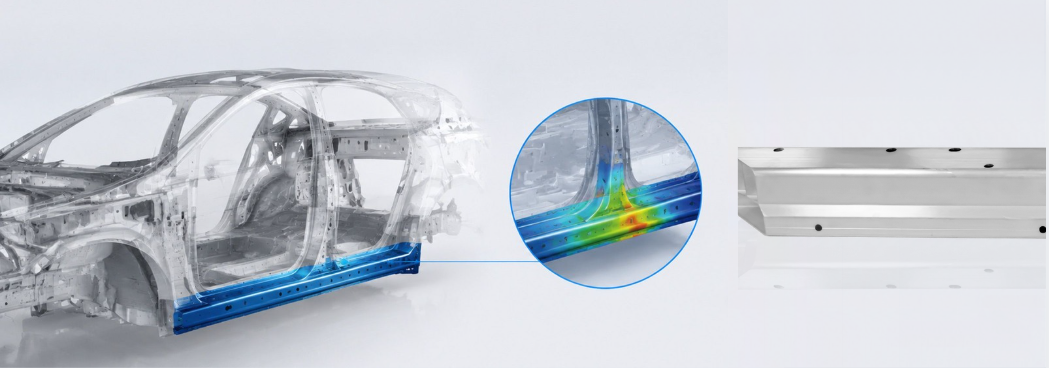
Collaborative Development: Cross-sectional structure optimization and CAE analysis are conducted based on customer requirements to ensure compliance with both high-strength/high-toughness specifications and pillar crush test standards.
Performance Validation: Demonstrates stable mechanical properties and passes OEM pillar crush tests, long-term and short-term thermal aging tests, and corrosion tests.
Safety Highlights: Combines high-strength, high-toughness extruded materials with specialized surface treatment to ensure a controlled crash energy transfer path, meeting safety standards for vehicle side-impact collisions.
-
Battery tray assembly
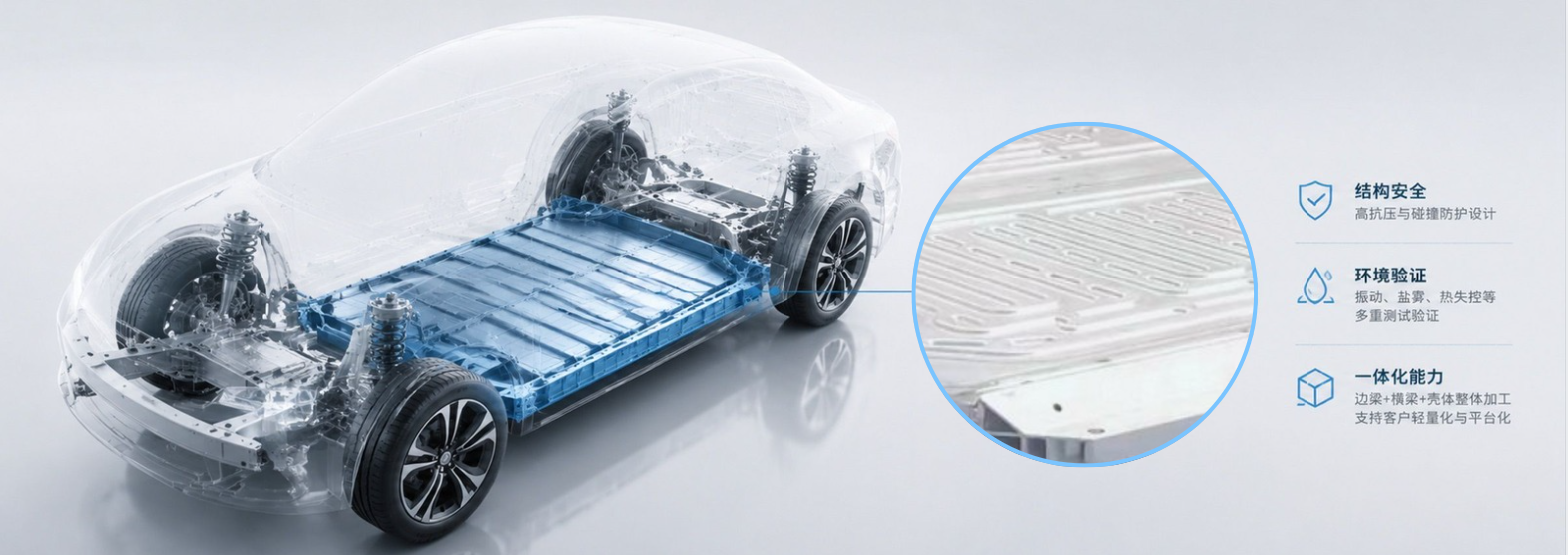
Robust Structural Design: Through tolerance allocation and profile control, the assembly of profiles achieves high compressive strength and an airtightness rating of IP67 or higher.
Environmental Validation: Passes tests for vibration, salt spray, thermal runaway protection, and mechanical shock, meeting OEM safety standards for battery packs.
Integrated Capabilities: Comprehensive machining of edge members, end plates, and housings supports customer needs for lightweight design and platform-based reuse.
-
Bumper beam assembly
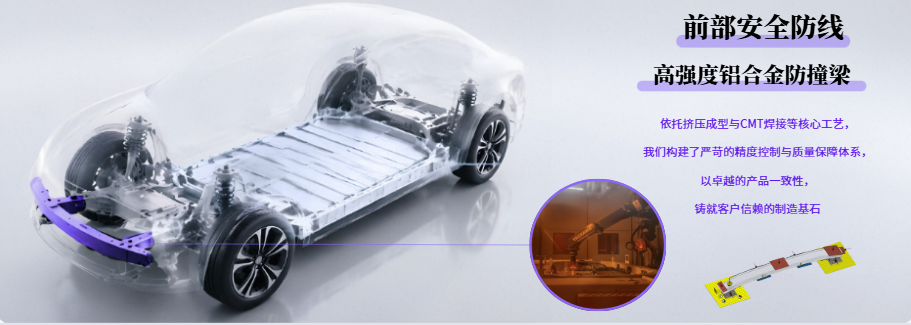
High-Precision Manufacturing: Features excellent assembly profile accuracy and a precise fit between the main beam and crash boxes; welding quality meets high industry standards.
Comprehensive Testing Passed: Successfully completed crash box crush tests, main beam three-point bending tests, and assessments for weld quality and corrosion resistance; bending angles and yield strength meet the rigorous requirements of OEMs.
Lightweight Design: Integrated aluminum profile design balances energy absorption with weight reduction, enhancing frontal collision compatibility.
-
Energy-absorbing box and longitudinal member
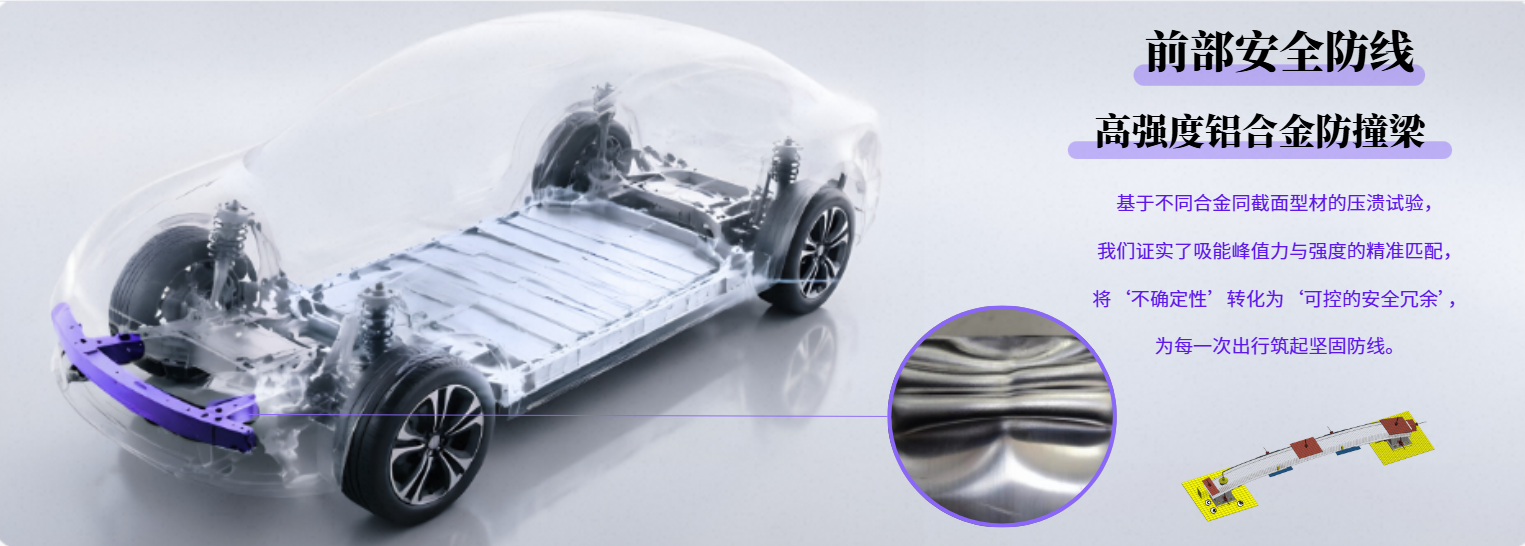
The magnitude of variations in the peak crushing force for energy absorption and in the strength of the battery tray assembly aligns closely with the design values.
By selecting alloy materials of varying strength grades, the overall energy absorption efficiency of the crash protection system is improved—without increasing system weight—thereby directly enhancing vehicle safety.